
What Are Metering Pumps and Why Are They Essential for Precision Fluid Control
Crowns has over 20+ years of experience designing and manufacturing industrial-grade Metering Pumps that deliver high accuracy, reliability, and adaptability for critical process control in industries ranging from wastewater treatment to pharmaceuticals. In this comprehensive guide, we answer key questions professionals ask when evaluating metering pump solutions for their operations.
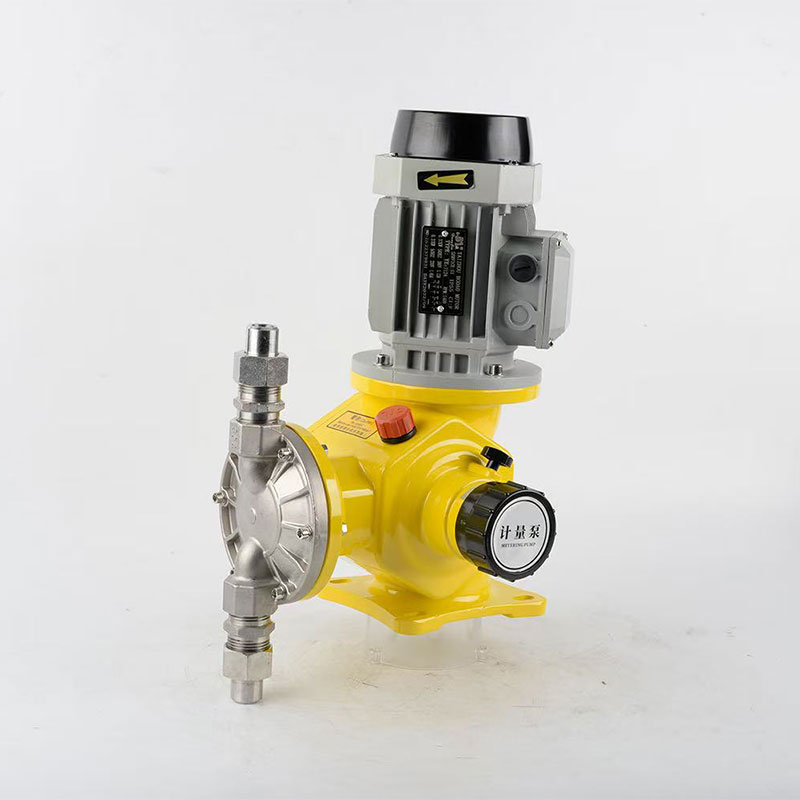
Table of Contents
- Executive Summary
- How Do Metering Pumps Work?
- Key Features & Advantages
- Types of Metering Pumps
- Industrial Applications
- How to Select the Right Metering Pump
- Metering Pumps Comparison Table
- Frequently Asked Questions
- Contact Us & Next Steps
Executive Summary
Metering Pumps, also known as dosing pumps, are precision fluid control devices designed to deliver exact volumes of liquid at controlled flow rates. They are a subclass of positive displacement pumps that excel in applications requiring highly accurate dosing and repeatability. Unlike conventional centrifugal pumps that regulate flow through pressure, metering pumps control the volumetric output directly through stroke length and frequency adjustments.
Leading manufacturers like Crowns combine advanced materials, rigorous quality testing, and multiple control options to ensure that their pumps meet demanding industrial requirements. Their offerings often achieve an accuracy of ±0.5% or better, enabling users to maintain product quality, safety, and regulatory compliance even under variable process conditions.
How Do Metering Pumps Work?
At the core, metering pumps operate via a reciprocating mechanism (such as a diaphragm, piston, or plunger) that draws fluid into a chamber and then expels it at a controlled rate. By adjusting the stroke length and stroke frequency, operators can fine-tune the pump’s output to match precise dosing requirements.
Basic Operation Steps:
- Suction Stroke: The pump’s diaphragm or piston retracts, creating a vacuum that draws fluid into the chamber.
- Discharge Stroke: Fluid is expelled from the chamber through the discharge valve at a controlled rate.
- Flow Adjustment: Flow is regulated by modifying stroke length and frequency, either manually or via digital control systems.
Key Features & Advantages
Metering Pumps are designed with several performance-enhancing features that make them essential in complex process environments:
- Precision Dosing: Flow rates can be controlled with high repeatability due to direct displacement technology.
- Versatile Control: Adjustable manually, via analog signals, or through integration with PLC/DCS automation.
- Chemical Compatibility: Constructed with PTFE, PVDF, SS316, or Hastelloy wetted parts depending on fluid properties.
- Safety Features: Overpressure protection, dry-run detection, and leak minimization reduce operational risk.
- Low Maintenance: Minimal wear components lead to reduced downtime and life-cycle costs.
Types of Metering Pumps
Metering pumps are available in several configurations depending on drive type and application focus. The most common include:
- Mechanical Diaphragm Pumps – Reliable design with static seals to avoid leakage. Ideal for general-purpose dosing.
- Solenoid Metering Pumps – Quick-response electromagnetic actuation, suitable for smaller flow rates.
- Motor-Driven Pumps – Driven by AC motors with variable speed controllers for high accuracy and automation capability.
Industrial Applications
Metering Pumps are indispensable in many industries where precision and process control are critical.
- Water & Wastewater Treatment: Accurate chemical dosing for pH control, disinfection, and coagulation.
- Chemical Processing: Injection of corrosive agents and additives.
- Oil & Gas: Corrosion inhibitors and viscosity modifiers for pipelines.
- Pharmaceutical & Biotech: Precise mixing of active ingredients and formulations.
- Food & Beverage: Additives, flavors, and preservatives with high dosing accuracy.
How to Select the Right Metering Pump
Choosing the right metering pump involves balancing fluid properties, flow requirements, control needs, and operating conditions. Key parameters to consider include:
- Fluid viscosity, corrosiveness, and temperature
- Desired flow rate and pressure range
- Required dosing accuracy
- Automation and control integration capability
- Compatibility with existing process systems
Metering Pumps Comparison Table
| Type of Metering Pump | Best For | Key Attributes | Typical Industries |
|---|---|---|---|
| Mechanical Diaphragm | General Dosing | No leakage, easy maintenance | Water, chemicals, pharmaceuticals |
| Solenoid | Low-Flow Precision | Energy efficient, compact | Lab, small dosing systems |
| Motor-Driven | Automated High Accuracy | PLC control, digital interface | Industrial automated processes |
Frequently Asked Questions
Q1: What makes a metering pump different from other pumps?
Unlike centrifugal pumps, metering pumps deliver fluid volume with direct control over displacement. This allows very accurate dosing (±0.5% or better) independent of system pressure changes.
Q2: Can metering pumps handle corrosive liquids?
Yes. Many metering pumps are built with aggressive chemical-resistant materials like PTFE, PVDF, or stainless steel to ensure compatibility with corrosive fluids.
Q3: Are metering pumps suitable for automated systems?
Absolutely. Many modern metering pumps can integrate with PLC or digital controls for automated dosing, remote monitoring, and real-time adjustments.
Contact Us & Next Steps
If you’re ready to optimize your fluid dosing processes with precision and reliability, speak with the experts at Crowns today. Whether you need a customized dosing solution or help selecting the best Metering Pumps for your project, our team is here to help. Contact us now to get a tailored consultation and competitive pricing on metering pump solutions.