
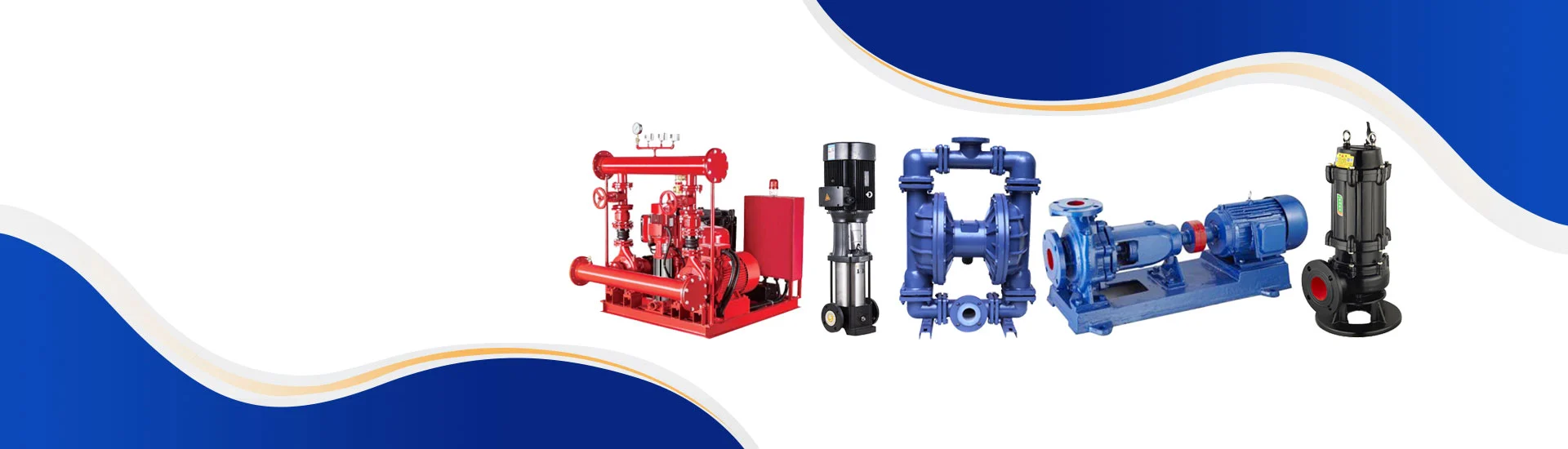
Non-clog sewage pump Introduction
Sewage Pumps: Types and Core Components
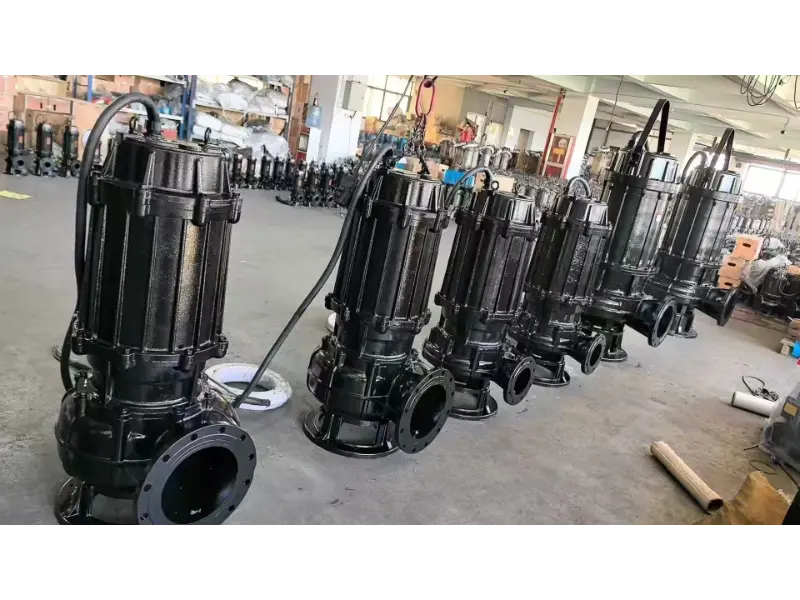
Sewage pumps are a type of non-clogging pump and come in various forms, such as submersible and dry types. Dry types include cam rotor sewage pumps, primarily used for conveying municipal wastewater. The temperature of the conveyed medium is typically not higher than 80°C. Since the medium often contains fibrous materials that tend to tangle, the flow passages of these pumps are prone to clogging. Therefore, clog resistance and reliability are crucial factors determining the quality of a sewage pump.
Like other pumps, the impeller and the volute casing (or diffuser) are the two core components of a sewage pump. Their performance fundamentally dictates the pump's overall capability. The pump's clog resistance and abrasion resistance are primarily ensured by these two components. Let's break them down:
Impeller Structural Types:
Impeller designs are mainly categorized into four types: Vane Type (Open and Closed), Vortex Type, Channel Type (including Single-Channel and Double-Channel), and Screw Centrifugal Type.
Open & Semi-Open Impeller: These are easy to manufacture. If clogging occurs inside the impeller, they are relatively simple to clean and maintain. However, during long-term operation, abrasion from particles can enlarge the gap between the vanes and the inner wall of the volute casing, leading to reduced efficiency. This enlarged gap also disrupts the pressure distribution across the vanes and destabilizes the flow pattern in the passage, causing pump vibration. This type is not well-suited for handling media containing large solids or long fibers. In terms of performance, its efficiency is low, reaching a maximum of only about 92% of a standard closed impeller. Its head curve is relatively flat.
Vortex Impeller: In pumps using this design, the impeller is partially or fully recessed from the main flow passage of the volute casing. This gives it excellent non-clogging performance and strong capability to pass large solids and long fibers. During operation, suspended particles or long fibers do not directly contact the impeller vanes. This results in minimal wear on the vanes, and there is no issue of gap enlargement due to abrasion, so efficiency does not drop severely over long-term use. Pumps with this impeller are suitable for conveying media containing large solids and long fibers. Performance-wise, its efficiency is lower, only about 70% of a standard closed impeller, and its head curve is relatively flat.
Closed Impeller: This type generally offers higher efficiency and maintains stable performance over long-term operation. Pumps using closed impellers experience lower axial thrust. Auxiliary vanes can be added on both the front and back shrouds. Front shroud auxiliary vanes help reduce vortex losses at the impeller inlet and wear on the wear ring by particles. Back shroud auxiliary vanes not only help balance axial thrust but also prevent suspended particles from entering the mechanical seal chamber, thus protecting the seal. However, this type has poor non-clogging performance, is prone to entanglement, and is not suitable for conveying raw wastewater containing large solids or long fibers.
Channel Impeller: This is a bladeless impeller where the flow passage is a curved channel from the inlet to the outlet. This makes it suitable for conveying media with large solids and long fibers, offering good clog resistance. Performance-wise, its efficiency is high and comparable to a standard closed impeller. However, pumps using this impeller type have a steeper head curve. The power curve is relatively stable, reducing the risk of motor overload. Its cavitation performance is inferior to that of a standard closed impeller, making it particularly suitable for pumps with a pressurized inlet.
Screw Centrifugal Impeller: The vanes of this impeller are twisted spiral blades extending axially from the suction side on a conical hub. Pumps with this impeller combine features of positive displacement and centrifugal pumps. As suspended particles flow through, they do not impact any part of the pump, resulting in low damage to both the pump and the conveyed medium. Due to the screw's propelling action, it has strong passing ability for suspended solids. Therefore, pumps with this impeller are suitable for media containing large solids, long fibers, and high concentrations. They are particularly advantageous where minimal damage to the conveyed medium is critical. Performance-wise, these pumps have a steep head curve and a relatively flat power curve.
Volute Casing / Diffuser:
The most common type of volute casing used in sewage pumps is the spiral volute. For wet-installation submersible pumps, radial diffusers or channel diffusers are often chosen. Spiral volutes come in three main types: volute (spiral) type, annular type, and semi-volute (intermediate) type. The true spiral volute is rarely used in sewage pumps. The annular volute, due to its simple structure and ease of manufacture, is more common in small sewage pumps. However, with the introduction of the semi-volute type, the use of the annular type is gradually declining. This is because the semi-volute type combines the high efficiency of the spiral type with the high-passage capability of the annular type, making it increasingly popular among manufacturers.
In summary, any sewage pump series is essentially a combination of different impeller types and different volute/diffuser types. As long as the impeller and volute/diffuser are well-matched to the application requirements, the pump's overall performance will be up to the task.
Previous:Maintenance of Sewage Pumps