
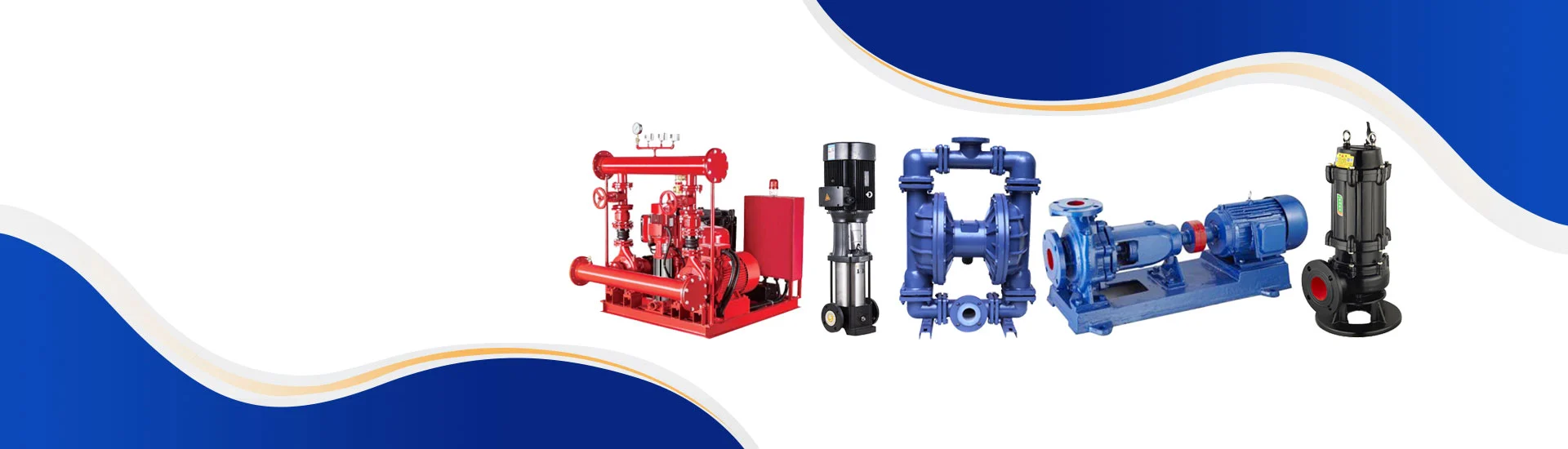
What Are The 4 Types of Pumps?
Pumps are indispensable workhorses across industries—from water supply and wastewater treatment to chemical processing and HVAC systems. Understanding the four primary pump categories is essential for engineers, procurement managers, and facility operators to select the right equipment for specific applications. Below, we break down the four main types of pumps, their working principles, and typical use cases.
Centrifugal Pumps: The Workhorse of Fluid Transfer
Centrifugal pumps are the most widely used pump type worldwide, operating on the principle of centrifugal force. A rotating impeller accelerates the fluid outward, converting rotational energy into hydrodynamic energy that pushes liquid through the discharge line.
These pumps excel at moving large volumes of low-viscosity liquids such as water, light oils, and chemicals. They are commonly found in municipal water systems, irrigation, power plants, and industrial process lines. Models like horizontal end-suction pumps (ISW series) and vertical pipeline pumps are favored for their compact design, easy maintenance, and reliable performance in continuous-duty applications.
Positive Displacement Pumps: Precision for Viscous Fluids
Unlike centrifugal pumps, positive displacement (PD) pumps move fluid by trapping a fixed amount and forcing it through the discharge port. This category includes gear pumps, lobe pumps, screw pumps, and piston pumps—each delivering a constant flow rate regardless of pressure changes.
PD pumps are the go-to choice for high-viscosity fluids such as heavy oils, slurries, pastes, and delicate chemical solutions where precise metering is critical. Industries like food and beverage, pharmaceuticals, and petrochemicals rely on them for their ability to handle shear-sensitive materials and maintain accurate flow rates under varying system pressures.
Submersible Pumps: Underwater Reliability
Submersible pumps are designed to operate fully submerged in the fluid they are pumping. With hermetically sealed motors and watertight casings, they eliminate the need for priming and are highly efficient at pushing water to the surface rather than pulling it.
These pumps are primarily used for drainage, sewage treatment, basement dewatering, well water extraction, and stormwater management. The WQ series sewage submersible pumps, for example, are engineered with cutting impellers to handle solids-laden wastewater without clogging. Their submerged operation also means they run quietly and are less prone to cavitation issues compared to above-ground alternatives.
Self-Priming Pumps: Versatility for Challenging Installations
Self-priming pumps are a specialized variant of centrifugal pumps that can automatically remove air from the suction line and create a vacuum, allowing them to start pumping without manual priming. They combine an internal air-water separation chamber with standard centrifugal impeller design.
These pumps are ideal for applications where the pump must be mounted above the liquid source, such as mobile pumping stations, construction site dewatering, agricultural irrigation, and industrial fluid transfer. Their ability to re-prime automatically after interruptions makes them particularly valuable in remote or intermittently operated systems where regular maintenance access is limited.
Choosing the Right Pump
Selecting the correct pump type depends on multiple factors: fluid viscosity, required flow rate and head pressure, solid content, installation environment, and energy efficiency goals. Centrifugal pumps suit high-flow, low-viscosity scenarios; positive displacement pumps handle thick fluids with precision; submersible pumps offer submerged reliability; and self-priming pumps deliver installation flexibility.
As a professional pump manufacturer specializing in industrial centrifugal pumps, submersible sewage pumps, and self-priming pumps, we provide customized solutions tailored to your operational needs. For technical consultation, product catalogs, or pricing inquiries, please contact us via WhatsApp: +86 190 1682 8739. Our engineering team is ready to support your project from specification selection to after-sales service.
Previous:What Is End Suction Pump