
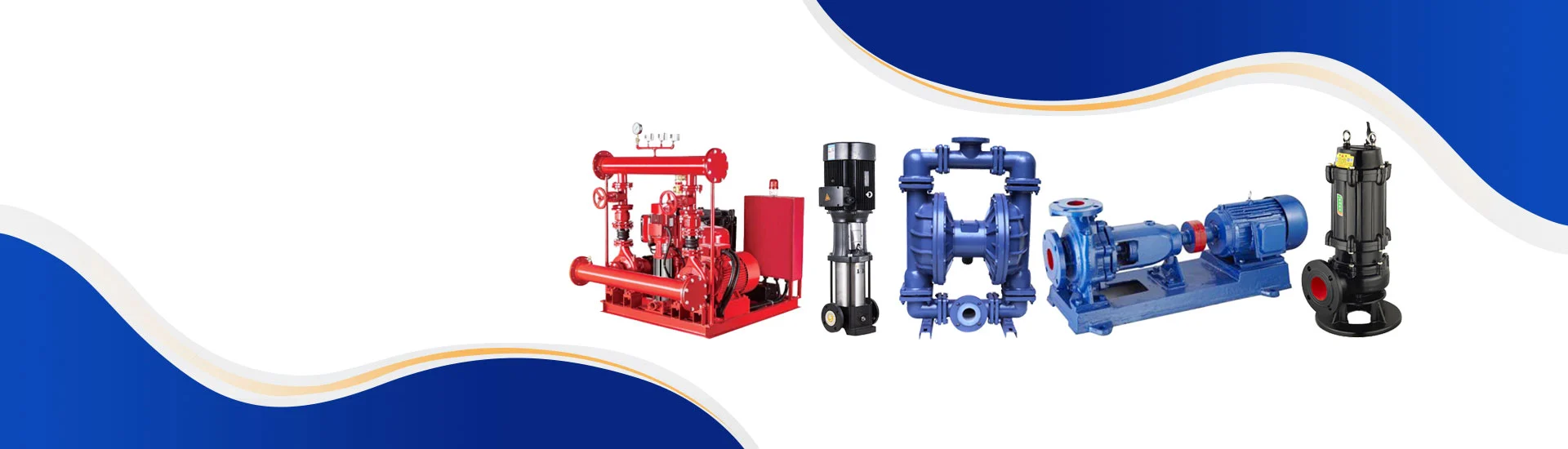
How To Install And Use An Industrial Water Pump?
Industrial water pumps are the core equipment of industrial water supply, fire protection, cooling and fluid transmission systems. Their correct installation and standardized use directly determine operational stability, service life and project safety. Many equipment failures such as mechanical seal damage, low water output and abnormal noise are caused by non-standard installation and improper daily operation. Mastering scientific installation and usage methods is essential for factory stable production and cost reduction.
Complete pre-installation preparation is the primary premise for smooth operation. Before installation, users need to conduct a comprehensive inspection of the pump body, motor, base frame, valves and pipelines to check for transportation deformation, cracks or loose parts. Meanwhile, verify the on-site foundation is firm and flat with a level deviation within the standard range, and reserve sufficient space for later daily maintenance and inspection. The suction and discharge pipelines must match the pump’s nozzle diameter; overly thin pipelines will increase flow resistance and affect pumping efficiency. In addition, install a filter and check valve on the pipeline to effectively block debris and prevent liquid backflow.
Standard installation procedures guarantee long-term stable operation. First, fix the pump unit on the base frame to ensure firm installation and no shaking during operation. Align the pump shaft and motor shaft accurately to avoid shaft deviation that causes bearing wear and unit vibration. For pipeline connection, keep the suction pipeline short and straight, avoid excessive bends and air pockets, which can prevent the common problem of insufficient water absorption. After pipeline installation, conduct tightness inspection to eliminate water leakage and air leakage risks. For non-self-priming industrial pumps, full priming is mandatory before startup to avoid dry running that burns out mechanical seals.
Standardized operation and daily maintenance are key to extending equipment life. When starting the pump, open the inlet valve first, keep the outlet valve slightly closed, and gradually adjust the outlet valve to the normal working state after the unit runs stably. It is forbidden to start the pump frequently or run it with overload for a long time. During operation, monitor key data including outlet pressure, flow rate and motor current in real time. Once abnormal noise, vibration or overheating occurs, stop the machine immediately for inspection. In daily maintenance, regularly clean the pipeline filter, check lubricating oil status and electrical circuit tightness, and replace worn parts regularly.
In conclusion, standardized installation and scientific operation can effectively reduce failure rates, improve working efficiency and save equipment maintenance costs. Whether for industrial production, building fire protection or water supply projects, high-quality industrial water pumps and professional technical guidance are indispensable.
For customized pump models, professional installation guidance and factory direct quotation, please feel free to contact us via WhatsApp: +86 190 1682 8739