
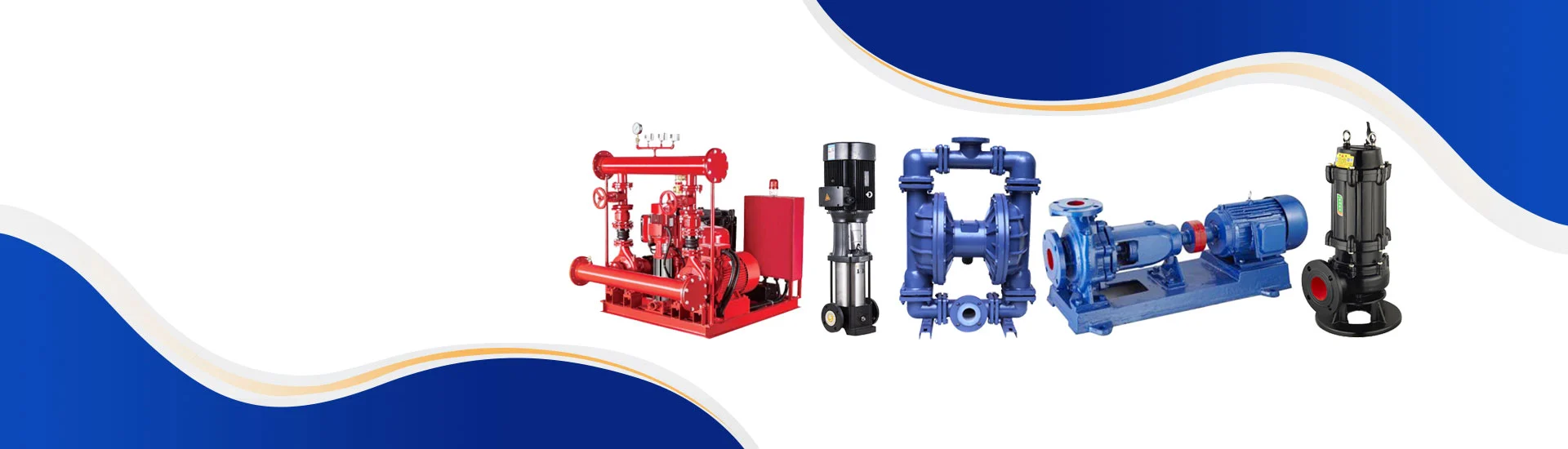
What Is The Difference between Vertical Inline Pump And Centrifugal Pump?
Vertical inline pumps and centrifugal pumps are often discussed as separate categories, but it is important to understand that a vertical inline pump is actually a type of centrifugal pump. The key differences lie in their configuration, installation approach, and design characteristics rather than fundamental operating principles.
Design and Configuration
The most fundamental distinction is structural orientation. Vertical inline pumps feature a vertical shaft with inlet and outlet ports aligned on the same horizontal axis, allowing fluid to pass straight through the pump casing. The motor mounts directly on top of the pump body, creating a compact, vertically stacked assembly. This inline design eliminates the need for directional changes within the pump, reducing energy loss and improving hydraulic efficiency.
Traditional centrifugal pumps, commonly configured horizontally, typically employ an end-suction design with a volute casing. Fluid enters axially and exits radially, requiring a 90-degree flow turn inside the pump. These pumps usually come with a separate baseplate and require precise alignment between the motor and pump shafts.
Space and Installation
Vertical inline pumps excel in space-constrained environments. Their compact footprint allows direct installation into existing piping systems without requiring a concrete foundation or extensive floor space. Many smaller models are supported entirely by the surrounding piping structure and standard hangers, making installation faster and less costly.
Conventional centrifugal pumps demand more floor area and dedicated mounting infrastructure. Their installation involves more complex piping layouts and alignment procedures, which can increase both initial setup time and labor costs.
Performance and Applications
While both operate on centrifugal force principles, their design differences lead to varied use cases. Vertical inline pumps are preferred in HVAC systems, high-rise buildings, and booster applications where space is premium and moderate pressure requirements exist. Their straight-through flow design minimizes turbulence and energy loss.
Standard centrifugal pumps offer greater versatility across a wider range of flow rates and head pressures. They are commonly used in water treatment, manufacturing processes, and large-scale industrial applications where easy maintenance access and high performance are priorities.
Maintenance Considerations
Horizontal centrifugal pumps generally offer easier maintenance access, as components are more readily reachable for inspection and repair. Vertical inline pumps, while space-efficient, can present challenges for servicing due to their compact vertical arrangement, often requiring more specialized procedures for seal replacement or motor work.
In summary, the choice depends on space availability, installation constraints, performance requirements, and maintenance preferences — each design serving specific operational needs within the broader centrifugal pump family.