
Why Is a Mechanical Diaphragm Metering Pump a Smart Choice for Precise Industrial Fluid Dosing
Abstract: A Mechanical Diaphragm Metering Pump is designed for controlled, repeatable fluid dosing in demanding industrial environments. Crowns manufactures this pump with more than 20 years of pump manufacturing experience, offering adjustable flow control, corrosion-resistant material options, static sealing at the hydraulic end, and flow stability that can be controlled within 1%. With applications spanning water treatment, environmental protection, pharmaceuticals, papermaking, new materials, and chemical handling, this technology provides a practical balance of accuracy, durability, safety, and cost efficiency.
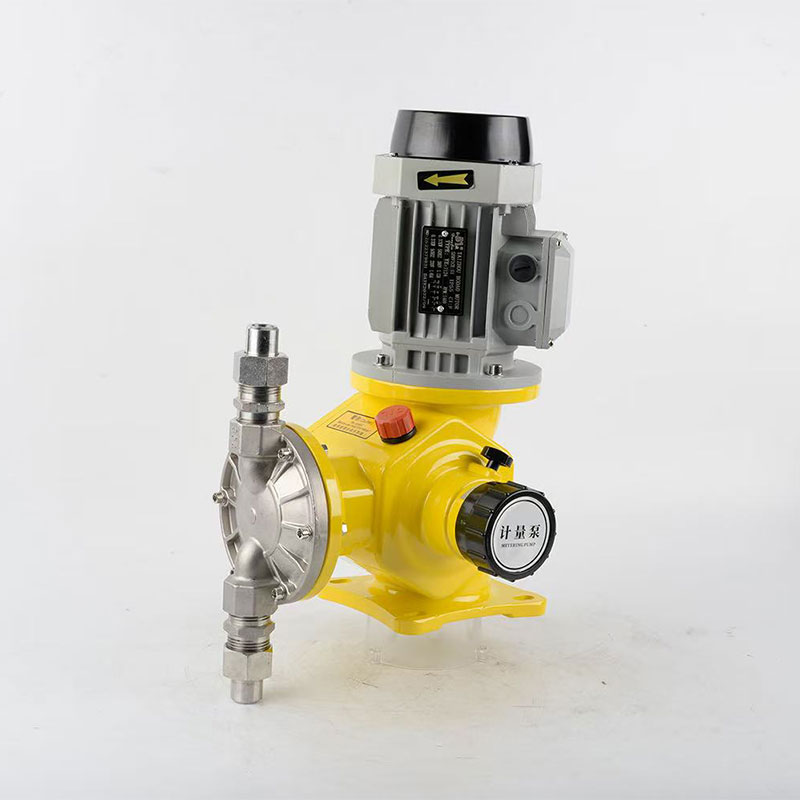
Table of Contents
- What Is a Mechanical Diaphragm Metering Pump?
- How Does a Mechanical Diaphragm Metering Pump Work?
- What Are the Key Features?
- What Are the Main Technical Parameters?
- Where Is It Used?
- How Should You Select the Right Pump?
- What Should You Know About Maintenance and Safety?
- FAQ
- Conclusion
What Is a Mechanical Diaphragm Metering Pump?
A Mechanical Diaphragm Metering Pump is a positive-displacement dosing pump that uses mechanical force to drive the diaphragm and move a controlled quantity of liquid. Unlike conventional centrifugal pumps, which are primarily designed for continuous fluid circulation, metering pumps are engineered to deliver controlled flow for applications where dosing consistency matters.
According to the product information provided by Crowns, its mechanical diaphragm metering pump uses an eccentric mechanical mechanism and supports both manual and automatic flow control. The flow can be adjusted from 0–100%, while frequency conversion can be used for automatic control.
The pump is generally suitable for liquids without solid particles and can handle a viscosity range of approximately 0.3–2000 mm²/s and temperatures from -15°C to 85°C. Its hydraulic end uses a static sealing concept to minimize leakage, while multiple pump-head materials are available for different chemical environments.
For buyers evaluating a Mechanical Diaphragm Metering Pump, these characteristics make the technology particularly attractive where stable dosing, chemical compatibility, and manageable operating costs are important.
How Does a Mechanical Diaphragm Metering Pump Work?
The operating principle is relatively straightforward. A mechanical drive converts rotational motion into reciprocating diaphragm movement. During the suction stroke, the diaphragm moves backward and creates a pressure difference that draws liquid into the pumping chamber. During the discharge stroke, the diaphragm moves forward and pushes the liquid toward the discharge line.
Check valves help maintain the desired flow direction. By controlling the diaphragm's movement, operators can regulate the amount of liquid delivered during each cycle.
- Suction stroke: The diaphragm retracts and draws process liquid into the chamber.
- Discharge stroke: The diaphragm advances and forces liquid toward the outlet.
- Flow adjustment: Pump output can be adjusted across a 0–100% range.
- Automatic control: Frequency conversion can be used for automated flow regulation.
- Isolation: The diaphragm separates the process liquid from the mechanical drive components.
This direct mechanical structure contributes to a relatively simple pump design and helps reduce maintenance complexity. Crowns specifies flow rates from 0.47 to 6000 L/h, with maximum working pressure optionally reaching 1.2 MPa depending on the model.
What Are the Key Features?
Industrial dosing equipment must balance accuracy, durability, chemical resistance, and operating costs. The Mechanical Diaphragm Metering Pump addresses these requirements through several engineering features.
1. Wide Flow Adjustment Range
The pump can be adjusted from 0–100%, allowing users to regulate dosing according to changing process requirements. This is useful for systems in which chemical demand varies throughout the production cycle.
2. Stable Metering Performance
Crowns specifies flow stability accuracy within 1% for the applicable product configuration. Such repeatability is valuable when excessive or insufficient dosing could influence treatment efficiency, product quality, or process stability.
3. Multiple Material Options
Depending on the process fluid, pump heads can be configured with PVC, PTFE, 304 stainless steel, or 316L stainless steel. Material selection should always be based on actual chemical compatibility and operating conditions rather than price alone.
4. Reinforced Diaphragm Construction
The diaphragm uses a multilayer composite structure incorporating a Teflon acid-resistant film, EPDM rubber, a SUS304 supporting core, reinforced nylon fiber, and an additional EPDM layer. This construction is intended to improve corrosion resistance and extend diaphragm service life.
5. Compact and Cost-Efficient Design
The pump uses a cast-aluminum housing designed for heat dissipation while keeping overall weight relatively low. Its mechanical structure also supports a cost-effective approach for low-pressure water treatment and chemical dosing applications.
What Are the Main Technical Parameters?
Before purchasing a dosing pump, engineers should compare flow capacity, pressure, viscosity, temperature, suction lift, materials, and control requirements. The following table summarizes the principal specifications published for the Crowns mechanical diaphragm metering pump.
| Parameter | Specification | Why It Matters |
|---|---|---|
| Flow Rate | 0.47–6000 L/h | Determines the dosing capacity of the selected model |
| Maximum Working Pressure | Up to 1.2 MPa | Defines suitability for different process pressure conditions |
| Flow Stability Accuracy | Within 1% | Supports repeatable dosing performance |
| Flow Adjustment | 0–100% | Allows flexible process control |
| Suction Lift | ≤3 m water column | Helps determine installation and suction-line requirements |
| Liquid Temperature | -15°C to 85°C | Defines the applicable operating temperature range |
| Viscosity | 0.3–2000 mm²/s | Indicates the range of liquid viscosities that can be considered |
| Pump Head Materials | PVC, PTFE, 304 SS, 316L SS | Allows selection according to chemical compatibility |
Where Is It Used?
The combination of controlled dosing, corrosion-resistant materials, and flexible flow adjustment makes this pump suitable for a wide variety of industrial processes.
- Water and wastewater treatment: Chemical dosing for treatment and process control.
- Environmental protection: Controlled injection of treatment chemicals into environmental systems.
- Pharmaceutical manufacturing: Accurate addition of process liquids where repeatability is important.
- Papermaking: Metered chemical addition during production processes.
- New-material industries: Controlled transfer and dosing of process chemicals.
- Chemical processing: Handling selected corrosive or hazardous liquids with appropriate material and diaphragm configurations.
Crowns specifically identifies environmental protection, water treatment, pharmaceuticals, papermaking, and new materials among the applicable industries. The company also notes that specialized configurations can be used for slurries and hazardous chemicals.
How Should You Select the Right Pump?
Selecting a Mechanical Diaphragm Metering Pump should begin with the process rather than the pump itself. A technically suitable model must match the liquid, required dosage, operating pressure, temperature, and control method.
- Determine the required flow rate. Identify normal, minimum, and maximum dosing requirements.
- Confirm discharge pressure. Select a model capable of operating reliably at the actual system pressure.
- Check chemical compatibility. Compare the liquid with diaphragm and pump-head materials.
- Evaluate viscosity and temperature. These properties can significantly affect pump performance.
- Check suction conditions. Confirm that the required suction lift is within the pump's capabilities.
- Choose the control method. Manual adjustment may be sufficient for simple systems, while frequency conversion can support automatic control.
- Consider safety requirements. For hazardous chemicals, additional diaphragm protection and monitoring may be necessary.
For system designers, it is especially important to remember that the published pump specification is only one part of the final selection process. Piping configuration, valve arrangement, fluid characteristics, pressure fluctuations, and installation conditions should also be evaluated.
What Should You Know About Maintenance and Safety?
A well-designed metering pump can provide reliable service, but correct installation and maintenance remain essential. Operators should establish inspection procedures based on the actual operating environment.
- Inspect the diaphragm regularly for signs of wear or chemical damage.
- Check suction and discharge valves for blockage, deposits, or abnormal wear.
- Confirm that piping connections remain properly sealed.
- Verify flow calibration periodically, especially when dosing accuracy is critical.
- Keep the pump within its specified pressure, temperature, viscosity, and suction conditions.
- Use materials compatible with the process liquid.
One important safety consideration is that the Crowns product specification states that the pump itself does not include a safety relief device. A safety valve should therefore be installed in the outlet pipeline when forming a complete system.
For flammable, explosive, strongly corrosive, toxic, or otherwise hazardous chemicals, Crowns indicates that a double-diaphragm hydraulic-end configuration and diaphragm rupture alarm can be selected to reduce risks associated with diaphragm failure.
FAQ
1. What is a Mechanical Diaphragm Metering Pump mainly used for?
It is primarily used for controlled dosing and transfer of liquids in applications such as water treatment, environmental protection, pharmaceuticals, papermaking, new-material production, and selected chemical processes.
2. How accurate is a Mechanical Diaphragm Metering Pump?
The Crowns specification states that flow stability accuracy can be controlled within 1% for the applicable configuration. Actual dosing performance depends on model, liquid properties, pressure, calibration, and installation conditions.
3. Can the pump handle corrosive chemicals?
Yes, when the pump-head and diaphragm materials are correctly selected. Crowns offers PVC, PTFE, 304 stainless steel, and 316L stainless steel pump-head options, while its multilayer diaphragm construction is designed for corrosion resistance.
4. Can the flow rate be adjusted while the pump is operating?
Yes. The product information states that the flow rate can be adjusted arbitrarily or output quantitatively whether the pump is running or stopped, with adjustment available across a 0–100% range.
5. What is the maximum flow rate?
The published parameter range is 0.47–6000 L/h, depending on the selected model and operating conditions.
6. Does the pump include a safety relief valve?
No. According to Crowns, the pump does not have an integrated safety relief device, so a safety valve should be installed in the pump outlet pipeline as part of the system design.
Conclusion
A Mechanical Diaphragm Metering Pump offers an effective combination of controllable dosing, mechanical simplicity, material flexibility, and cost efficiency. With a published flow range of 0.47–6000 L/h, adjustable output from 0–100%, multiple pump-head materials, and optional configurations for demanding chemical applications, it can meet a broad range of industrial fluid-handling requirements. Crowns' more than 20 years of pump manufacturing experience further supports its positioning as a China manufacturer and supplier for customers seeking practical metering solutions.
If you are evaluating a Mechanical Diaphragm Metering Pump for water treatment, chemical dosing, pharmaceutical processing, papermaking, or another industrial application, contact us to discuss your required flow rate, pressure, fluid characteristics, materials, and control requirements. The Crowns engineering team can help you identify a suitable configuration for your application and develop a reliable dosing solution.