
Why Is a Mechanical Diaphragm Metering Pump the Best Choice for Accurate and Reliable Chemical Dosing
When industries need consistent and accurate fluid dosing, choosing the right Mechanical Diaphragm Metering Pump becomes essential. Crowns specializes in manufacturing high-performance metering pumps designed for chemical injection, water treatment, industrial processing, agriculture, and many other demanding applications. Built with precision mechanical drive technology, a Mechanical Diaphragm Metering Pump delivers stable flow rates, excellent leak prevention, low maintenance costs, and long service life, making it one of the most trusted dosing solutions for modern industrial systems.
A Mechanical Diaphragm Metering Pump is widely recognized for its ability to deliver precise chemical dosing while maintaining excellent reliability and safety. This guide explains how mechanical diaphragm metering pumps work, their advantages over other dosing technologies, typical industrial applications, selection criteria, maintenance recommendations, and why they remain one of the most economical solutions for continuous chemical injection. Whether you're selecting equipment for water treatment, chemical manufacturing, food processing, or wastewater management, this article will help you make an informed purchasing decision.
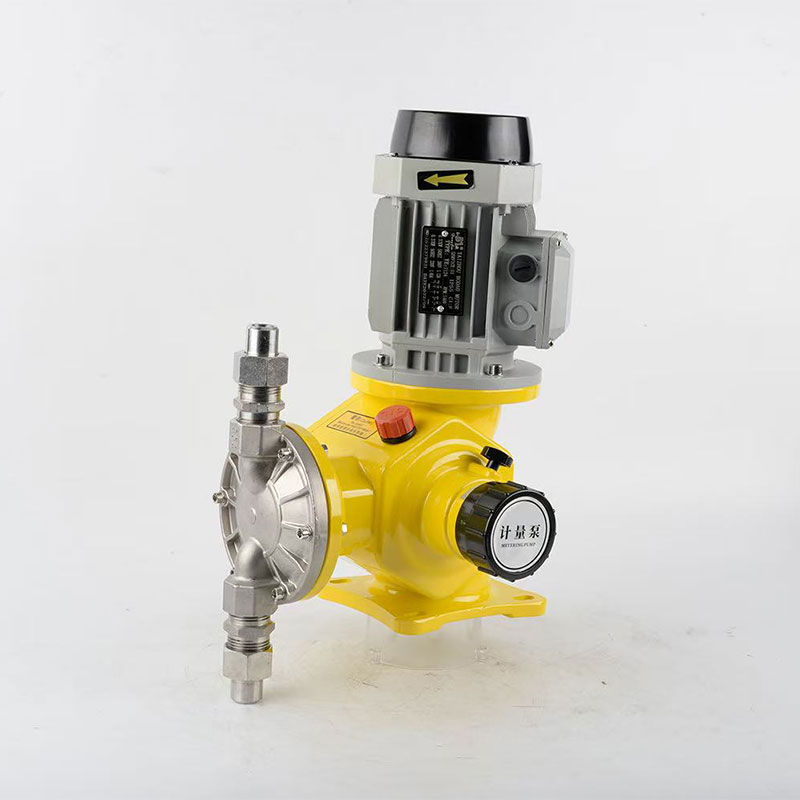
Table of Contents
- How Does a Mechanical Diaphragm Metering Pump Work?
- What Are the Main Advantages of Mechanical Diaphragm Metering Pumps?
- Where Are Mechanical Diaphragm Metering Pumps Commonly Used?
- Mechanical Diaphragm vs. Other Metering Pump Technologies
- How to Choose the Right Mechanical Diaphragm Metering Pump
- Maintenance Tips for Long-Term Performance
- Frequently Asked Questions
- Conclusion
How Does a Mechanical Diaphragm Metering Pump Work?
A Mechanical Diaphragm Metering Pump is a positive displacement pump that uses a mechanically driven diaphragm to move liquids with exceptional precision. Unlike centrifugal pumps that depend on fluid velocity, metering pumps deliver a fixed volume during each stroke, ensuring repeatable and highly accurate dosing regardless of changing process conditions.
Inside the pump, an electric motor drives a gearbox that converts rotary motion into reciprocating movement. This motion pushes and pulls a flexible diaphragm, creating alternating suction and discharge cycles. During the suction stroke, the diaphragm retracts, allowing liquid to enter the pump chamber through the inlet check valve. During the discharge stroke, the diaphragm moves forward, forcing the liquid through the outlet check valve at a controlled flow rate.
Since the diaphragm completely separates the pumped liquid from the mechanical drive components, corrosive, toxic, or hazardous chemicals remain safely contained, significantly reducing the risk of leakage and equipment contamination.
Key Components
- Electric motor
- Reduction gearbox
- Eccentric drive mechanism
- Flexible PTFE or composite diaphragm
- Inlet and outlet check valves
- Pump head
- Flow adjustment mechanism
This straightforward mechanical design contributes to excellent reliability while minimizing maintenance requirements compared with more complex hydraulic metering systems.
What Are the Main Advantages of Mechanical Diaphragm Metering Pumps?
Mechanical diaphragm metering pumps have become a preferred solution across multiple industries because they balance precision, durability, operating safety, and cost efficiency. Their dependable performance makes them suitable for both continuous-duty industrial operations and intermittent dosing applications.
High Metering Accuracy
These pumps provide consistent flow control, making them ideal for applications where even small deviations in chemical dosage can affect production quality or regulatory compliance. Adjustable stroke length allows operators to fine-tune dosing volumes with remarkable precision.
Leak-Free Chemical Handling
The diaphragm forms a complete barrier between the pumped liquid and the drive mechanism. This sealed construction greatly reduces the possibility of chemical leakage, improving workplace safety and protecting sensitive equipment from corrosion.
Excellent Chemical Compatibility
Mechanical diaphragm metering pumps can handle a wide range of aggressive chemicals, including acids, alkalis, disinfectants, oxidizing agents, coagulants, and various industrial additives. Selecting the appropriate diaphragm and wetted materials further extends compatibility with demanding process media.
Low Operating Costs
With fewer hydraulic components and a relatively simple drive mechanism, mechanical diaphragm pumps require less maintenance than many alternative metering technologies. Routine servicing is straightforward, minimizing downtime and lowering lifetime ownership costs.
Energy Efficiency
Positive displacement operation enables accurate dosing with relatively low power consumption. This makes mechanical diaphragm pumps especially attractive for facilities operating multiple dosing systems around the clock.
Reliable Long-Term Performance
When properly maintained, these pumps can operate continuously for years while maintaining stable dosing accuracy. Their robust construction is well suited for harsh industrial environments where equipment reliability is essential.
Where Are Mechanical Diaphragm Metering Pumps Commonly Used?
Thanks to their versatility and precise flow control, Mechanical Diaphragm Metering Pumps are used in a broad range of industrial sectors. Their ability to handle aggressive chemicals safely makes them indispensable for numerous dosing applications.
| Industry | Typical Application | Common Chemicals |
|---|---|---|
| Water Treatment | Disinfection and pH adjustment | Chlorine, sodium hypochlorite, sulfuric acid |
| Wastewater Treatment | Coagulation and flocculation | PAC, polymers, ferric chloride |
| Chemical Manufacturing | Process chemical injection | Acids, alkalis, catalysts |
| Power Plants | Boiler water treatment | Phosphate, ammonia, oxygen scavengers |
| Food & Beverage | Cleaning and sanitation systems | CIP chemicals, disinfectants |
| Agriculture | Fertilizer dosing and irrigation | Liquid fertilizers, micronutrients |
| Mining | Ore processing chemicals | Flocculants, flotation reagents |
| Pulp & Paper | Bleaching and chemical preparation | Hydrogen peroxide, sodium hydroxide |
These diverse applications demonstrate why mechanical diaphragm metering pumps continue to be one of the most trusted chemical dosing solutions across industrial markets worldwide.
Mechanical Diaphragm vs. Other Metering Pump Technologies
Understanding how a Mechanical Diaphragm Metering Pump compares with other metering technologies helps engineers and purchasing managers choose the most suitable equipment for their specific operating conditions.
Mechanical diaphragm pumps are valued for their balance of affordability, dependable performance, and ease of maintenance. Hydraulic diaphragm metering pumps typically provide higher discharge pressures and greater dosing accuracy but involve more complex hydraulic systems and higher maintenance costs. Plunger metering pumps offer excellent pressure capabilities but require dynamic seals that are more susceptible to leakage when handling corrosive or hazardous chemicals.
Peristaltic pumps excel when transferring abrasive or shear-sensitive fluids, but tubing replacement represents a recurring maintenance expense. Solenoid-driven diaphragm pumps are compact and cost-effective for small dosing requirements; however, they generally cannot match the continuous-duty capabilities and higher flow capacities offered by mechanically driven diaphragm pumps.
For many industrial chemical dosing systems requiring medium flow rates, reliable long-term operation, and economical ownership, a Mechanical Diaphragm Metering Pump remains one of the most practical and cost-effective choices.
How to Choose the Right Mechanical Diaphragm Metering Pump
Selecting the right Mechanical Diaphragm Metering Pump involves much more than matching a required flow rate. Every dosing application has unique operating conditions, and choosing the proper configuration ensures higher efficiency, longer equipment life, and lower operating costs.
Determine the Required Flow Capacity
Begin by calculating the exact dosing volume needed per hour or per day. It is generally recommended to select a pump that normally operates between 30% and 80% of its maximum capacity, leaving room for future process adjustments without sacrificing dosing accuracy.
Evaluate Discharge Pressure
The system pressure should always be lower than the pump's maximum rated discharge pressure. Additional factors such as pipe friction, elevation changes, back pressure valves, and injection points should also be considered during pump selection.
Select Compatible Wetted Materials
Material compatibility is critical when handling corrosive chemicals. Depending on the application, common pump head materials include:
- PVC for general water treatment chemicals
- PVDF for strong oxidizing agents
- Stainless Steel for high-temperature industrial liquids
- PTFE diaphragms for superior chemical resistance
Consider Installation Environment
Indoor and outdoor installations require different protection levels. Environmental temperature, humidity, dust, ventilation, and available maintenance space all influence long-term pump reliability.
Automation Requirements
Modern dosing systems often integrate with PLC or SCADA control systems. Depending on the process, users may require manual adjustment, analog control (4–20 mA), pulse input control, or digital communication for remote monitoring and automatic flow regulation.
Maintenance Tips for Long-Term Performance
Although Mechanical Diaphragm Metering Pumps are known for their durability, routine maintenance remains essential for maintaining dosing accuracy and extending equipment life.
Recommended Maintenance Checklist
- Inspect the diaphragm regularly for wear or fatigue.
- Clean inlet and outlet check valves to prevent clogging.
- Verify suction lines remain free from air leaks.
- Lubricate mechanical drive components according to manufacturer recommendations.
- Check fasteners and mounting bolts for vibration-related loosening.
- Monitor flow consistency and recalibrate the pump when necessary.
- Replace worn seals and valves during scheduled maintenance.
Implementing preventive maintenance not only minimizes unexpected downtime but also reduces long-term repair costs and helps maintain stable chemical dosing performance throughout the pump's service life.
Best Practices for Achieving Accurate Chemical Dosing
Even the highest-quality Mechanical Diaphragm Metering Pump performs best when installed and operated correctly. Following industry best practices can significantly improve dosing precision and overall system reliability.
- Install the pump as close as possible to the chemical storage tank to reduce suction losses.
- Use appropriate foot valves and suction strainers to prevent debris from entering the pump.
- Install pulsation dampeners when smoother flow is required.
- Use back-pressure valves to maintain consistent discharge pressure.
- Select properly sized piping to minimize pressure loss.
- Calibrate flow rates periodically using actual operating conditions.
- Maintain accurate records of maintenance and calibration schedules.
Combining quality equipment with proper installation practices helps maximize dosing accuracy while extending the service life of the entire chemical injection system.
Why Choose Crowns Mechanical Diaphragm Metering Pumps?
Crowns is committed to providing dependable fluid handling solutions that meet the demanding requirements of industrial customers worldwide. Our Mechanical Diaphragm Metering Pumps are engineered to deliver stable, accurate, and safe chemical dosing across a wide variety of industries.
Every Crowns metering pump is manufactured with strict quality control standards and carefully selected materials to ensure reliable operation under continuous-duty conditions. Whether your application involves municipal water treatment, wastewater management, chemical production, agriculture, food processing, or power generation, our engineering team can recommend a dosing solution tailored to your specific process requirements.
Key benefits of choosing Crowns include:
- High metering accuracy for precise chemical dosing
- Robust mechanical drive design for long service life
- Excellent resistance to corrosive chemicals
- Low maintenance requirements and reduced operating costs
- Multiple material configurations for different applications
- Custom flow rates and pressure options
- Professional technical support and responsive after-sales service
Frequently Asked Questions
What is the difference between a mechanical diaphragm pump and a hydraulic diaphragm pump?
A mechanical diaphragm pump uses a direct mechanical drive to move the diaphragm, while a hydraulic diaphragm pump uses hydraulic oil to transfer force. Mechanical models are simpler, more economical, and easier to maintain, whereas hydraulic models are typically selected for higher-pressure applications.
Can a Mechanical Diaphragm Metering Pump handle corrosive chemicals?
Yes. When equipped with compatible diaphragm materials and corrosion-resistant pump heads such as PVDF, PVC, or PTFE, these pumps can safely handle many acids, alkalis, disinfectants, and industrial chemicals.
How accurate is a Mechanical Diaphragm Metering Pump?
Most industrial models provide dosing accuracy of approximately ±1% under normal operating conditions, making them suitable for precise chemical injection processes.
How often should maintenance be performed?
Routine inspections should be carried out regularly based on operating hours and chemical characteristics. Preventive maintenance typically includes checking diaphragms, valves, seals, lubrication, and flow calibration.
Which industries benefit most from Mechanical Diaphragm Metering Pumps?
These pumps are widely used in water treatment, wastewater treatment, chemical manufacturing, food and beverage processing, agriculture, mining, pharmaceuticals, power generation, and many other industries requiring reliable chemical dosing.
Conclusion
A Mechanical Diaphragm Metering Pump offers an ideal combination of precision, safety, durability, and cost-effectiveness for industrial chemical dosing. Its leak-free diaphragm design, accurate flow control, and low maintenance requirements make it a preferred solution across countless industries. Whether you are upgrading an existing dosing system or designing a new process, selecting a high-quality metering pump can significantly improve operational efficiency, reduce chemical waste, and enhance process reliability.
If you're looking for a dependable Mechanical Diaphragm Metering Pump backed by professional engineering support and consistent manufacturing quality, Crowns is ready to help. Our experienced team can recommend the ideal dosing solution based on your flow rate, pressure, and chemical compatibility requirements. Contact us today to discuss your application, request technical guidance, or receive a customized quotation for your next project.