
Why Is a Mechanical Diaphragm Metering Pump the Most Reliable Solution for Accurate Chemical Dosing
Accurate chemical dosing is critical in industries such as water treatment, chemical processing, agriculture, power generation, and pharmaceuticals. A Mechanical Diaphragm Metering Pump is designed to deliver precise, repeatable, and safe fluid dosing while minimizing maintenance requirements and operational risks.
In this comprehensive guide, we explore how a Mechanical Diaphragm Metering Pump works, its advantages, applications, selection criteria, maintenance practices, and why companies worldwide trust Crowns solutions for demanding dosing environments.
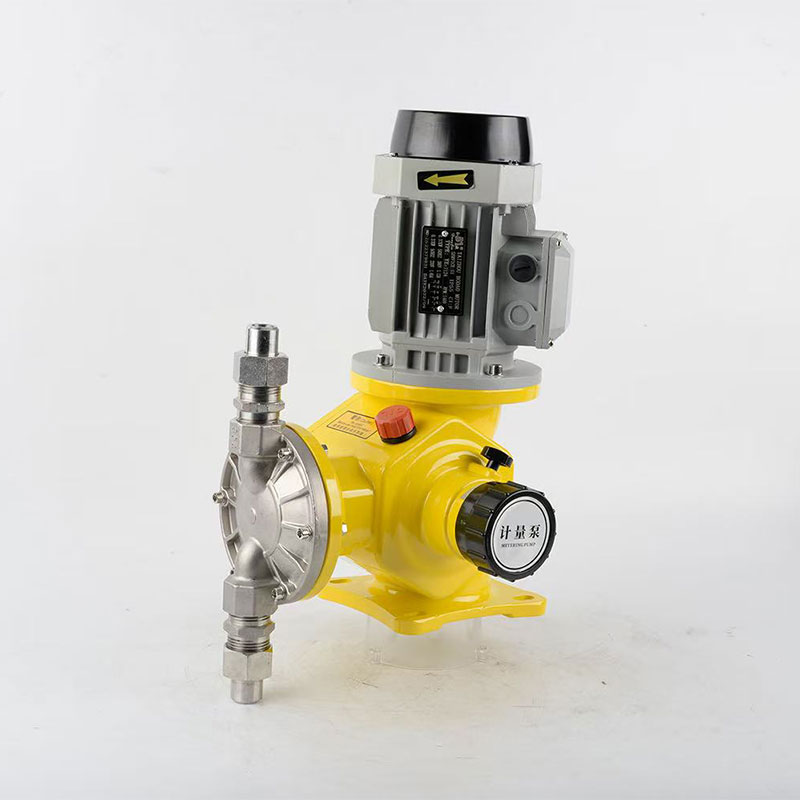
Table of Contents
- What Is a Mechanical Diaphragm Metering Pump?
- How Does a Mechanical Diaphragm Metering Pump Work?
- Why Choose a Mechanical Diaphragm Metering Pump?
- What Are the Main Components?
- Where Are Mechanical Diaphragm Metering Pumps Used?
- Mechanical Diaphragm vs Other Metering Pumps
- How to Select the Right Pump?
- Maintenance Best Practices
- Why Choose Crowns?
- Future Trends in Metering Technology
- Frequently Asked Questions
What Is a Mechanical Diaphragm Metering Pump?
A Mechanical Diaphragm Metering Pump is a positive displacement dosing pump that uses a mechanically actuated diaphragm to accurately transfer and inject chemicals into a process stream. Unlike centrifugal pumps, which primarily move large volumes of fluid, metering pumps focus on delivering highly controlled flow rates with exceptional accuracy.
The diaphragm acts as a flexible barrier between the pumped liquid and the drive mechanism. This design prevents leakage and protects critical internal components from aggressive chemicals.
The Mechanical Diaphragm Metering Pump is widely recognized for its reliability, simple structure, cost-effectiveness, and ability to handle corrosive or hazardous chemicals safely.
How Does a Mechanical Diaphragm Metering Pump Work?
The operation of a Mechanical Diaphragm Metering Pump is based on reciprocating motion. A motor drives a gearbox, which converts rotary motion into a reciprocating movement that flexes the diaphragm.
Operating Cycle
- Diaphragm retracts and creates suction.
- Inlet check valve opens.
- Liquid enters the pump chamber.
- Diaphragm moves forward.
- Pressure increases inside the chamber.
- Outlet valve opens.
- Fluid is discharged accurately into the system.
Because each stroke delivers a predictable volume, the Mechanical Diaphragm Metering Pump achieves precise dosing performance over long operating periods.
Why Choose a Mechanical Diaphragm Metering Pump?
Many industrial operators choose a Mechanical Diaphragm Metering Pump because of its unique combination of precision, safety, and durability.
Key Benefits
- High dosing accuracy
- Excellent chemical resistance
- Leak-free operation
- Low maintenance requirements
- Long service life
- Stable performance under varying conditions
- Easy flow adjustment
- Cost-effective operation
For facilities handling hazardous chemicals, environmental compliance and worker safety are major concerns. The sealed diaphragm design significantly reduces leakage risks and supports safer plant operation.
What Are the Main Components?
Understanding the internal structure of a Mechanical Diaphragm Metering Pump helps users optimize performance and maintenance schedules.
| Component | Function |
|---|---|
| Motor | Provides driving power |
| Gearbox | Converts rotational motion into reciprocating movement |
| Diaphragm | Separates liquid from mechanical components |
| Pump Head | Contains fluid chamber |
| Inlet Valve | Controls fluid entry |
| Outlet Valve | Controls fluid discharge |
| Flow Adjustment Mechanism | Regulates dosing volume |
Every component contributes to the precision and reliability expected from a Mechanical Diaphragm Metering Pump.
Where Are Mechanical Diaphragm Metering Pumps Used?
The versatility of a Mechanical Diaphragm Metering Pump makes it suitable for numerous industrial applications.
Water Treatment
- Chlorine dosing
- PH adjustment
- Coagulant injection
- Disinfection systems
Chemical Processing
- Acid transfer
- Alkali dosing
- Catalyst injection
- Additive feeding
Agriculture
- Fertilizer injection
- Nutrient dosing
- Irrigation systems
Power Plants
- Boiler treatment chemicals
- Corrosion inhibitors
- Water conditioning agents
Food and Beverage
- Cleaning chemicals
- Sanitizing agents
- Process additives
Wherever precise chemical addition is required, a Mechanical Diaphragm Metering Pump often becomes the preferred solution.
Mechanical Diaphragm vs Other Metering Pumps
Different dosing technologies serve different operational needs.
| Feature | Mechanical Diaphragm Pump | Plunger Pump | Hydraulic Diaphragm Pump |
|---|---|---|---|
| Leak Prevention | Excellent | Moderate | Excellent |
| Maintenance | Low | Higher | Moderate |
| Cost | Economical | Medium | Higher |
| Chemical Compatibility | Excellent | Good | Excellent |
| Accuracy | High | Very High | Very High |
For many standard industrial dosing tasks, a Mechanical Diaphragm Metering Pump offers the best balance between performance and cost.
How to Select the Right Pump?
Selecting the correct Mechanical Diaphragm Metering Pump requires evaluating several factors.
Flow Rate Requirements
Determine the exact dosing volume needed per hour or per day.
Operating Pressure
Ensure the pump can overcome system back pressure.
Chemical Compatibility
Material selection should match the chemical being handled.
Temperature Conditions
Extreme temperatures may require specialized diaphragm materials.
Control Requirements
- Manual adjustment
- Automatic control
- Remote monitoring
- PLC integration
A properly selected Mechanical Diaphragm Metering Pump can significantly improve operational efficiency while reducing lifecycle costs.
What Maintenance Practices Maximize Pump Life?
Routine maintenance helps maintain accuracy and prevent unexpected downtime.
Recommended Maintenance Checklist
- Inspect diaphragm condition regularly
- Check valve performance
- Verify flow calibration
- Monitor motor operation
- Inspect seals and fittings
- Clean pump head periodically
- Replace worn components proactively
When properly maintained, a Mechanical Diaphragm Metering Pump can provide years of dependable service.
Why Do Many Customers Choose Crowns Mechanical Diaphragm Metering Pumps?
Crowns has established a strong reputation in fluid handling and chemical dosing equipment by focusing on product quality, engineering innovation, and customer support.
A Crowns Mechanical Diaphragm Metering Pump is designed to provide stable flow control, reliable performance, and long-term operational value across a wide range of industrial applications.
Advantages Offered by Crowns
- Advanced manufacturing processes
- Strict quality control systems
- Corrosion-resistant materials
- Reliable dosing accuracy
- Comprehensive technical support
- Customized application solutions
Whether used in water treatment facilities, chemical plants, or industrial processing systems, Crowns products are engineered to deliver consistent dosing performance under demanding operating conditions.
What Are the Future Trends in Metering Pump Technology?
As industrial automation continues to advance, Mechanical Diaphragm Metering Pump systems are evolving to become smarter and more efficient.
Emerging Trends
- IoT-enabled monitoring
- Predictive maintenance technologies
- Energy-efficient motor systems
- Digital flow adjustment
- Remote diagnostics
- Advanced material engineering
These innovations help operators improve productivity, reduce maintenance costs, and achieve more sustainable operations.
Frequently Asked Questions (FAQ)
1. What is the primary advantage of a Mechanical Diaphragm Metering Pump?
Its primary advantage is precise chemical dosing combined with leak-free operation and low maintenance requirements.
2. Can a Mechanical Diaphragm Metering Pump handle corrosive chemicals?
Yes. When constructed with compatible materials such as PVDF, PTFE, or stainless steel, it can safely handle many corrosive chemicals.
3. How accurate is a Mechanical Diaphragm Metering Pump?
Most models achieve dosing accuracy within ±1% under normal operating conditions.
4. How often should diaphragms be replaced?
Replacement intervals depend on operating conditions, chemical compatibility, and usage frequency, but routine inspections are recommended.
5. Is a Mechanical Diaphragm Metering Pump suitable for water treatment plants?
Absolutely. It is one of the most commonly used dosing technologies in municipal and industrial water treatment applications.
6. Can the flow rate be adjusted during operation?
Yes. Most Mechanical Diaphragm Metering Pump models support adjustable stroke length or variable-speed control.
Conclusion
A Mechanical Diaphragm Metering Pump remains one of the most dependable solutions for accurate chemical dosing across numerous industries. Its leak-free design, excellent chemical compatibility, low maintenance requirements, and precise flow control make it an essential component in modern process systems.
If you are looking for a high-performance Mechanical Diaphragm Metering Pump that delivers long-term reliability and exceptional value, Crowns offers professional solutions tailored to your specific application needs. Whether you need support with product selection, technical specifications, or customized dosing systems, contact us today to discuss your project and discover how our expertise can help improve your operational efficiency and dosing accuracy.